
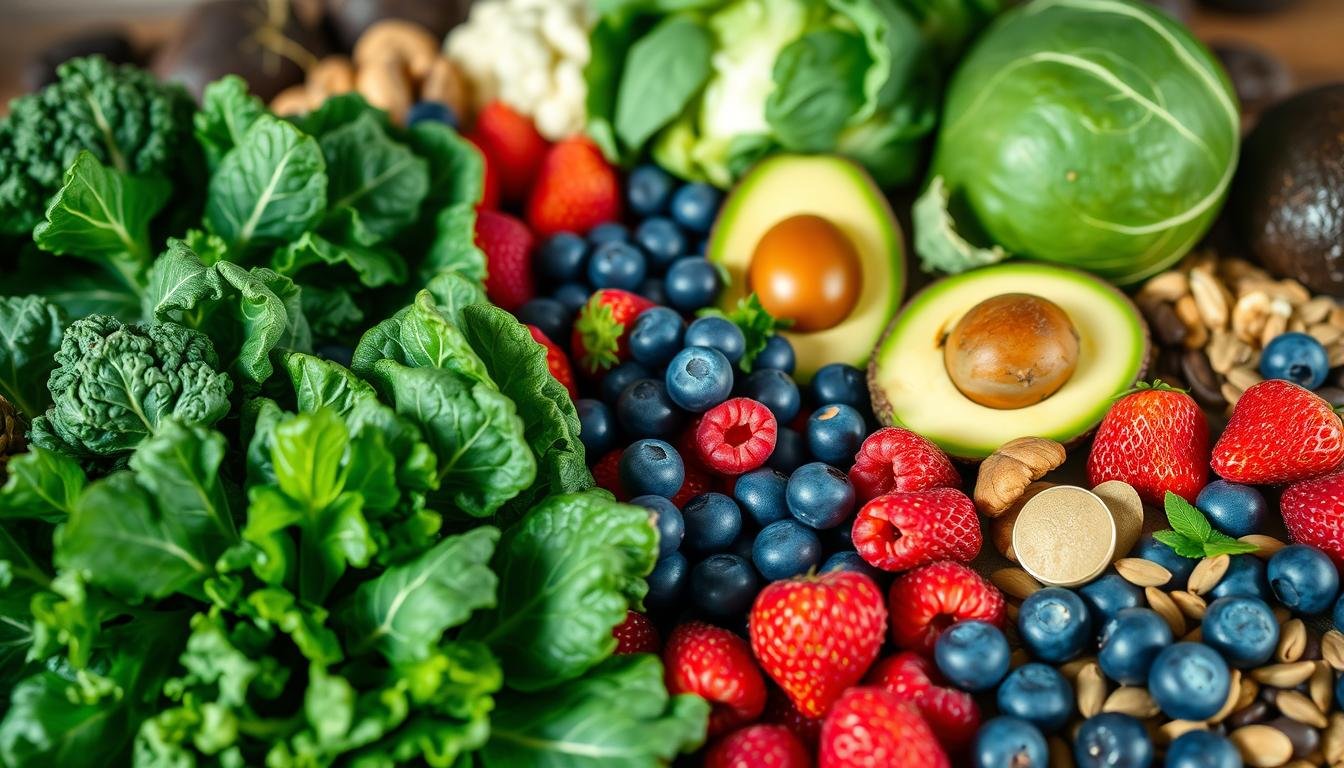
Hormonal imbalance can really affect your health and happiness. As a woman, keeping your hormonal balance right is key. It helps with everything from your menstrual cycle to how you feel.
What you eat is very important for your hormone health. Some foods can make symptoms better, while others can make them worse. By choosing the right foods, you can start to balance your hormones.
Choosing the right foods can help control your hormones and make you feel better. In this article, we’ll look at the best foods for hormonal balance. We’ll also give you a detailed guide to a hormonal balance diet.
Key Takeaways
- Eating a balanced diet is crucial for maintaining hormonal balance.
- Certain foods can help alleviate symptoms of hormonal imbalance.
- A well-planned diet can help regulate hormones and improve overall health.
- Nutritional choices play a significant role in supporting hormone health.
- Achieving hormonal balance through diet can improve overall well-being.
Understanding Female Hormones and Their Role in Health
Hormones are chemical messengers in women that control many bodily functions. They affect reproductive health and mood. Knowing about these hormones is key to staying healthy.
Key Female Hormones and Their Functions
The ovaries produce most female hormones, with the adrenal glands and thyroid gland also involved. The main hormones are:
Estrogen, Progesterone, and Testosterone
- Estrogen helps with the menstrual cycle, bone health, and mood.
- Progesterone gets the uterus ready for pregnancy and keeps it healthy during pregnancy.
- Testosterone is in women too, boosting libido and energy.
Thyroid and Adrenal Hormones
- Thyroid hormones control metabolism, energy, and health.
- Adrenal hormones, like cortisol, help with stress and blood sugar.
How Hormonal Imbalances Affect Your Body
Hormonal imbalances can impact your health in big ways. They can cause short-term and long-term problems.
Short-term Effects on Mood and Energy
Imbalances can lead to mood swings, fatigue, and energy changes. These affect daily life and well-being.
Long-term Health Consequences
Long-term imbalances can lead to serious health issues. These include osteoporosis, heart disease, and metabolic disorders. Eating hormone-balancing foods and knowing foods that support hormone health can help prevent these problems.
Understanding female hormones and their imbalances is the first step to better health. Making dietary changes can greatly improve your well-being.
Signs You May Have a Hormonal Imbalance
If you notice changes in your body or mood, it might be a hormonal issue. Hormonal imbalances happen when there’s too much or too little hormone. Since hormones control many body functions, an imbalance can cause many symptoms.
Physical Symptoms of Hormone Imbalance
Physical symptoms are often the first signs of hormonal imbalance. These can include changes in weight, metabolism problems, skin issues, hair loss, and sleep troubles.
Weight Changes and Metabolism Issues
Unexplained weight gain or loss, especially around the belly, might signal hormonal imbalance. Metabolism problems can also show up as changes in hunger or energy.
Skin, Hair, and Sleep Problems
Hormonal shifts can cause skin problems like acne, dryness, or oiliness. Hair might become brittle, fall out, or grow in unwanted places. Sleep issues, like insomnia or too much sleep, can also happen due to hormonal changes.
Emotional and Mental Signs of Hormonal Issues
Hormonal imbalances can also affect your mood and mind, causing mood swings, anxiety, and problems with thinking clearly.
Mood Swings and Anxiety
Changes in hormone levels can lead to sudden mood swings, irritability, and anxiety. These emotional changes can be hard to handle without fixing the hormonal problem.
Cognitive Function and Mental Clarity
Hormonal imbalances can make it hard to focus, remember things, and feel mentally clear. Eating hormone-friendly foods can help with these symptoms.
Spotting these signs is the first step to finding hormonal imbalance remedies. Eating foods to balance female hormones is a key step in managing hormonal health.
How Nutrition Impacts Your Hormonal Health
Nutrition is key to keeping your endocrine system healthy. What you eat greatly affects your hormonal balance. Eating a balanced diet helps control your hormones well.
The Gut-Hormone Connection
The gut and hormones are closely connected. Your gut’s bacteria help make and control hormones. It’s important to have a healthy gut to keep hormones in balance.
Microbiome Balance and Hormone Regulation
Keeping your gut’s bacteria in balance is crucial for hormone control. Foods like yogurt and fermented veggies are good for your gut. Also, eating foods like asparagus and bananas helps your gut stay healthy.

Nutrient Deficiencies That Affect Hormone Production
Not getting enough nutrients can harm hormone production. Some vitamins and minerals are key for hormone balance.
Essential Vitamins and Minerals for Hormone Health
Vitamins D and B are very important for hormone health. Not having enough minerals like magnesium and zinc can also hurt hormone production. It’s important to get these nutrients through food or supplements.
| Nutrient | Role in Hormone Health | Food Sources |
|---|---|---|
| Vitamin D | Regulates hormone production | Fatty fish, egg yolks |
| Magnesium | Supports hormone balance | Nuts, leafy greens |
| Zinc | Essential for hormone production | Red meat, shellfish |
Best Foods for Hormonal Balance in Women
The foods you eat can greatly affect your hormonal health. Some foods are especially good for keeping hormones in balance. Eating a diet full of important nutrients can help your endocrine system work better. This leads to better health and happiness.
Essential Nutrients for Hormone Health
Some nutrients are key for keeping hormones balanced. These include minerals and vitamins that help make and control hormones.
Magnesium, Zinc, and B Vitamins
- Magnesium helps control cortisol levels and supports hormonal balance.
- Zinc is vital for making hormones like insulin and thyroid hormones.
- B vitamins are important for energy and can help with hormonal imbalance symptoms.
Vitamin D and Iodine
- Vitamin D is good for overall health and affects hormone regulation.
- Iodine is crucial for the thyroid, helping prevent hormonal imbalances related to it.
How These Foods Support Your Endocrine System
The endocrine system is complex and can be influenced by many factors. Certain foods can help by balancing blood sugar and supporting liver detox.
Balancing Blood Sugar Levels
Foods high in fiber, like whole grains and veggies, help control blood sugar. This is important for hormonal balance. Blood sugar swings can cause insulin resistance and other hormonal problems.
Supporting Liver Detoxification
The liver is vital for hormone regulation by cleaning the body. Foods that help the liver, like leafy greens and cruciferous veggies, support this process.
Hormone-Balancing Protein Sources
Protein is key for keeping hormones in check. Eating the right proteins can greatly improve your health. Your body uses protein to fix and grow tissues, including those in your endocrine system.
Having enough protein helps make hormones. These hormones are vital for many body functions.
Plant-Based Proteins for Hormone Health
Plant-based proteins are great for hormone balance. They are full of fiber, vitamins, and minerals that help your endocrine system.
Legumes, Nuts, and Seeds
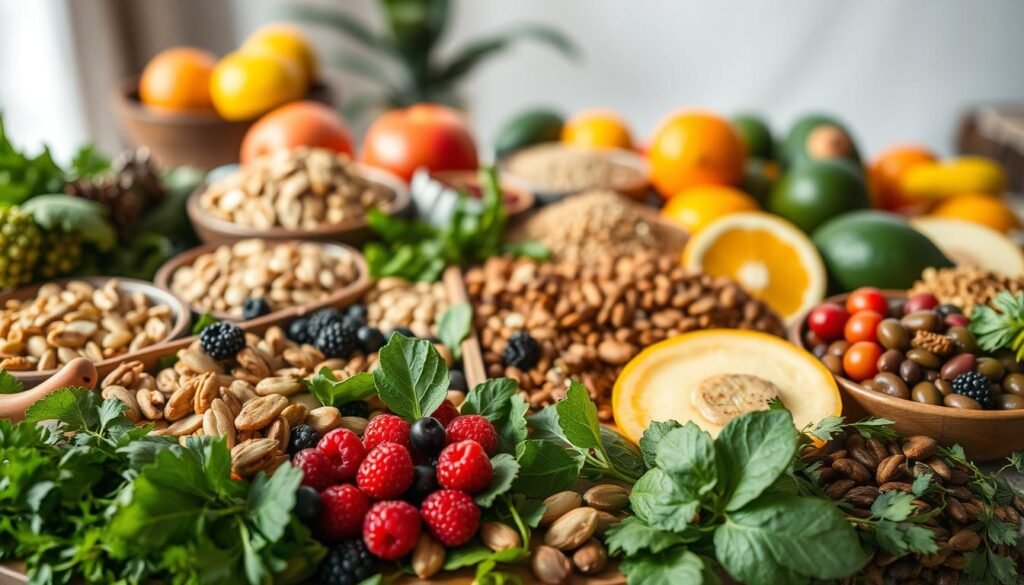
Legumes like lentils and chickpeas are packed with protein and fiber. They’re perfect for hormone balance. Nuts and seeds, like almonds and chia seeds, have lots of protein and healthy fats. These support hormone production.
Eating these foods can help keep your hormones in check.
Soy Products and Phytoestrogens
Soy products, like tofu and tempeh, have phytoestrogens. These can help balance estrogen levels. While there’s debate on soy’s impact on hormones, eating whole soy foods in moderation can be good for hormone health.
Animal Proteins That Support Hormonal Balance
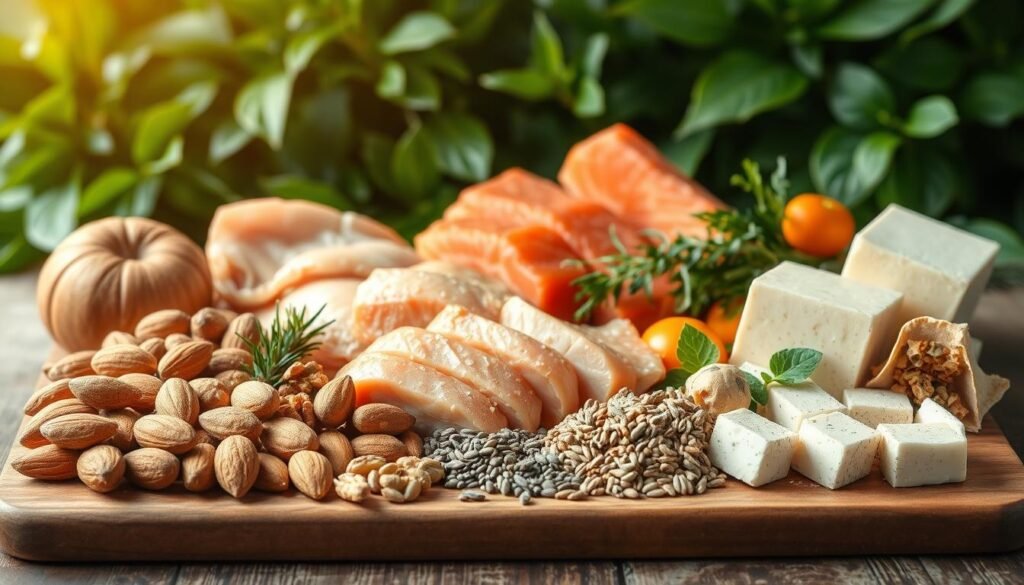
Animal proteins are also important for hormone health. Choosing high-quality animal proteins gives your body the nutrients it needs for hormone production.
Wild-Caught Fish and Seafood
Wild-caught fish and seafood are full of omega-3 fatty acids and protein. They’re great for hormone balance. These nutrients help your endocrine system and reduce inflammation.
Pasture-Raised Eggs and Poultry
Pasture-raised eggs and poultry are rich in protein and healthy fats. They have omega-3 fatty acids too. These foods give your body what it needs to make hormones and support your endocrine health.
Adding a variety of these protein sources to your diet can boost your hormonal health and overall well-being.
Healthy Fats That Regulate Hormone Production
Healthy fats are key for hormone balance. Adding them to your meals boosts your health. They help your body make and balance hormones, which is vital for a hormonal balance diet.

Omega-3 Rich Foods for Hormone Health
Omega-3 fatty acids are vital for hormone balance. They keep your endocrine system healthy, which makes hormones.
Fatty Fish and Algae Sources
Fatty fish like salmon, sardines, and mackerel are full of omega-3s. Algae oil is great for vegetarians and vegans. Eating these foods helps your hormone health.
Walnuts, Flaxseeds, and Chia Seeds
Walnuts, flaxseeds, and chia seeds are plant-based omega-3 sources. They’re easy to add to meals, like salads and smoothies. This supports your hormone-friendly foods intake.
Other Beneficial Fats for Endocrine Support
Other healthy fats also help with hormone production and balance.
Avocados and Olive Oil
Avocados have healthy fats that support hormone production. Olive oil, with its monounsaturated fats, is also great for hormone health. It’s a key part of a hormonal balance diet.
Coconut Oil and Medium-Chain Triglycerides
Coconut oil has MCTs, which are easily used by the body for hormone production. MCTs are a great addition to hormone-balancing diets.
Eating these healthy fats helps your endocrine system and promotes hormone balance. A diet rich in hormone-friendly foods is essential for good health and well-being.
Fruits and Vegetables That Support Female Hormones
Some fruits and vegetables are great for female hormone balance. Adding these to your diet helps a lot. It’s important to know which ones are best for hormone health.
Cruciferous Vegetables and Hormone Detoxification
Cruciferous veggies are super good for hormone balance. They help clean out hormones, keeping your system healthy.
Broccoli, Cauliflower, and Brussels Sprouts
Broccoli, cauliflower, and Brussels sprouts have sulforaphane. This helps your liver detox hormones better. Eating these veggies boosts your body’s hormone regulation.
Kale, Cabbage, and Bok Choy
Kale, cabbage, and Bok choy are also great for hormones. They have vitamins and minerals that help your endocrine system. This supports hormonal balance.
Antioxidant-Rich Produce for Hormonal Health
Antioxidant-rich fruits and veggies fight oxidative stress. This stress can mess with hormone balance. Eating a variety of colorful produce gives you lots of antioxidants.
Berries and Citrus Fruits
Berries and citrus fruits are tasty and full of antioxidants. They reduce inflammation and stress, helping with hormone balance.
Leafy Greens and Colorful Vegetables
Leafy greens like spinach and colorful vegetables like bell peppers are full of antioxidants. They support hormone health and overall well-being.
Adapting Your Diet for Different Hormonal Life Stages
Hormonal changes throughout a woman’s life mean you need to adjust your diet. As you go through different life stages, your diet needs to change. This helps keep you healthy and eases symptoms.
Nutrition During Menstrual Cycles
Some nutrients can help with PMS symptoms during your menstrual cycle. Iron-rich foods are key to replace iron lost during menstruation.
Foods to Reduce PMS Symptoms
- Complex carbohydrates like whole grains help with mood swings.
- Omega-3 fatty acids in fish and flaxseeds can lessen inflammation and cramps.
- Foods high in magnesium and vitamin B6 can ease bloating and moodiness.
Supporting Iron Levels During Menstruation
Eat iron-rich foods like red meat, spinach, and fortified cereals. Vitamin C boosts iron absorption. So, eat foods high in vitamin C, like citrus fruits or bell peppers, with iron-rich foods.
Dietary Support During Perimenopause and Menopause
When you reach perimenopause and menopause, your diet needs to change. This helps with hot flashes, mood swings, and bone health.
Foods to Manage Hot Flashes and Mood Changes
- Phytoestrogen-rich foods like soy and flaxseeds can help with hormonal balance.
- Calcium and vitamin D are key for bone health.
- Avoid spicy foods, caffeine, and alcohol to lessen hot flashes.
Bone-Supporting Nutrition After Menopause
After menopause, the risk of osteoporosis goes up. Make sure you get enough calcium from dairy, leafy greens, and fortified foods. Vitamin D from supplements or sunlight also helps bones.
Foods to Avoid for Better Hormonal Health
Choosing the right foods is key to hormonal health. Some foods can upset hormone balance, causing health problems. Knowing what to avoid can help keep your hormones in check.
Hormone-Disrupting Ingredients in Processed Foods
Processed foods often have ingredients that harm hormonal health. Knowing these can help you eat better.
Artificial Additives and Preservatives
Processed foods have additives and preservatives that can mess with hormones. Artificial flavors, colors, and preservatives like BHA and BHT are common culprits. Eating whole foods helps avoid these hormone disruptors.
Hidden Sources of Endocrine Disruptors
Some foods have hidden endocrine disruptors, like plastics and pesticides. Choosing organic and avoiding BPA in packaging helps. Knowing where your food comes from is important for hormonal health.
Common Dietary Triggers for Hormonal Imbalance
Some foods can upset hormone balance. Knowing these can help you make better food choices.
Sugar and Refined Carbohydrates
Too much sugar and refined carbs can cause insulin resistance, leading to hormonal issues. Lowering sugar and refined carb intake helps balance hormones.
Alcohol and Caffeine
Too much alcohol and caffeine can mess with hormones. Watching how much you drink and consume caffeine helps your endocrine system. Drinking in moderation and being careful with caffeine is wise.
Avoiding these foods and ingredients helps support hormonal health. Making smart food choices is a big step towards hormonal balance.
Conclusion: Creating a Hormone-Friendly Eating Plan
Now you know how important nutrition is for hormonal balance. By eating foods like leafy greens, omega-rich fish, and whole grains, you help your endocrine system. This supports your overall health and well-being.
A hormone-friendly diet is more than just adding good foods. It’s also about avoiding foods that can upset your hormones. Try to eat less processed foods, sugars, and saturated fats. These can harm your hormonal health.
Eat natural hormone balance foods like cruciferous vegetables, berries, and fatty fish. They give your body the nutrients it needs for hormone production. Making smart food choices helps you control your hormonal health and feel great.
Adopting a hormone-friendly diet helps your overall health and lowers the risk of hormonal imbalances. Start with small changes in your diet and see how your body reacts. Add hormone-friendly foods to your meals and snacks. This helps keep your hormones balanced and supports your well-being.