
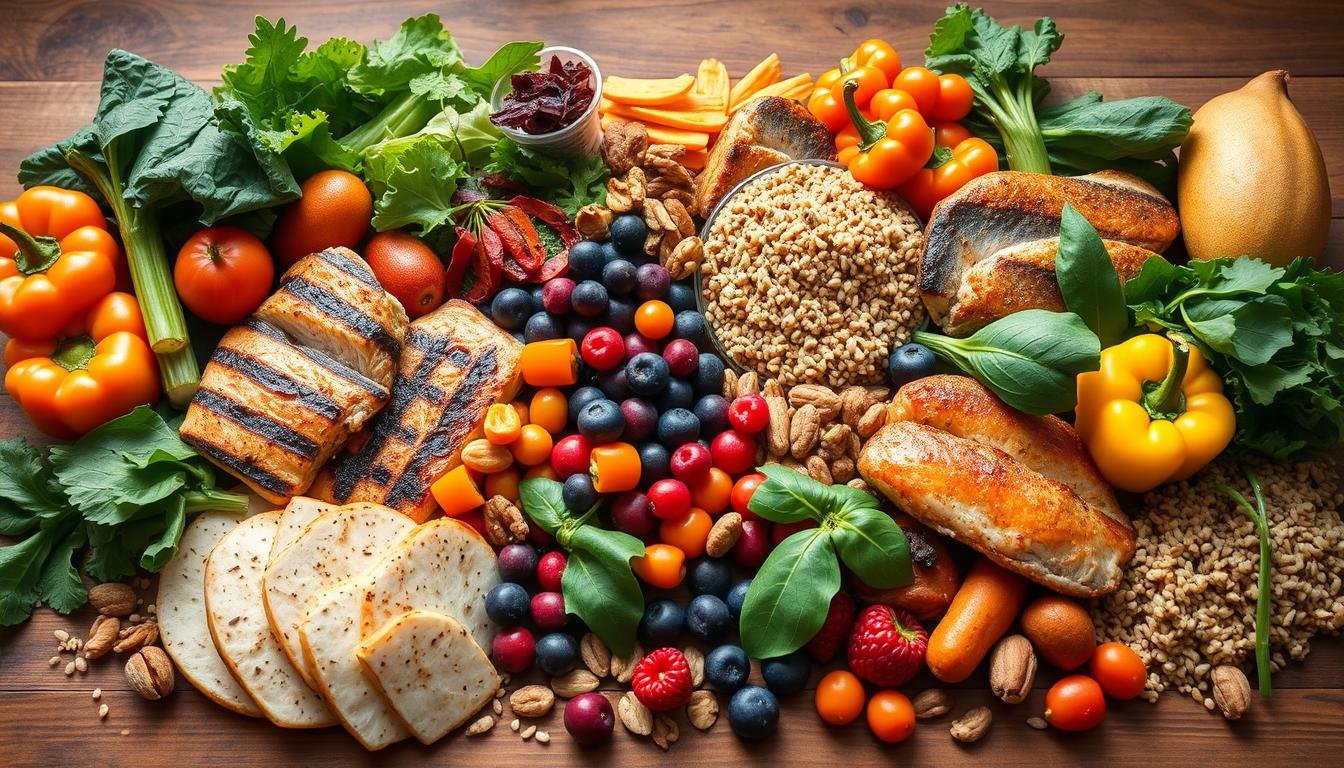
Building muscle requires regular exercise and a well-planned diet. Eating the right foods is key for muscle growth and repair. You need to fuel your body with the right nutrients for muscle development.
Your diet should have a variety of nutrient-rich foods that help muscles grow. By adding the right foods to your meals, you can support your fitness goals and get the body you want.
Key Takeaways
- Understand the importance of diet in muscle building
- Learn about the key nutrients required for muscle growth
- Discover how to create a muscle-building diet plan
- Explore the role of nutrition in supporting fitness goals
- Find out how to fuel your body for optimal muscle development
The Science Behind Muscle Building and Nutrition
To build muscle, you need to know the nutritional science behind it. Muscle building is complex. It involves exercise and the right nutrition for growth and recovery.
How Muscles Grow: The Protein Synthesis Process
Muscle growth happens through protein synthesis. Your body builds new proteins to repair and grow muscles. Protein synthesis starts with resistance training and enough protein. Protein gives your body the amino acids needed for muscle repair and growth.
The Role of Macronutrients in Muscle Development
Macronutrients are key for muscle growth. Knowing their roles helps you optimize your diet for building muscle.
Protein as the Building Block
Protein is essential for muscle building. It provides the amino acids needed for muscle growth. It’s important to eat enough protein to support muscle protein synthesis.
Carbohydrates for Energy and Recovery
Carbohydrates are crucial for workout energy and recovery. They help refill glycogen stores, which is vital for muscle recovery and growth. Eating carbs after a workout boosts recovery and supports muscle building.
Understanding protein and carbohydrates helps you tailor your diet for muscle building. Good muscle building nutrition means a balanced mix of these nutrients, matched with your workout plan.
Understanding Your Protein Requirements
Finding the right amount of protein is key for building muscle. Protein helps muscles grow and repair. It’s important to get the right amount to reach your fitness goals.
Calculating Your Daily Protein Needs Based on Body Weight
To figure out your daily protein needs, think about your body weight. Aim for 0.8-1 gram of protein per pound of body weight each day. For example, if you weigh 150 pounds, you should eat about 120-150 grams of protein.
This is a good starting point, but your needs might change based on other factors.
Adjusting Protein Intake Based on Activity Level and Goals
Your activity level and fitness goals also affect your protein needs. Athletes or those who work out hard might need more protein. This helps with muscle recovery and growth.
For example, advanced trainers might need up to 1.2-1.6 grams of protein per kilogram of body weight.
Protein Needs for Beginners vs. Advanced Trainers
Beginners can start with 0.8-1 gram of protein per pound of body weight. But, advanced trainers might need to adjust this based on their hard workouts. It’s important to watch your progress and change your protein intake as needed.
Special Considerations for Different Body Types
Body types like ectomorph, mesomorph, and endomorph have different nutritional needs. For instance, ectomorphs might need more protein because of their fast metabolism. Endomorphs should watch their calorie intake.
Knowing your body type helps you adjust your protein intake to meet your specific needs.
Best High Protein Foods for Muscle Building Naturally
For those aiming to build muscle naturally, knowing the best high protein foods is key. Protein is vital for muscle growth and repair. The quality and source of protein matter as much as the amount.
Complete Protein Sources and Their Benefits
Complete proteins have all nine essential amino acids your body can’t make. Animal-based foods like chicken, fish, eggs, and dairy products are full of these. They help build and repair muscles.
Eggs stand out for their high quality protein. They have all the amino acids your body needs.
Incomplete Proteins and How to Combine Them Effectively
Incomplete proteins, found in plant-based foods like beans, lentils, and nuts, are missing some amino acids. But, mixing different incomplete proteins can give you all the amino acids you need. For example, legumes with grains or seeds with nuts can provide the right mix for muscle building.
Protein Quality Metrics: PDCAAS and DIAAS Explained
Protein quality is measured by PDCAAS and DIAAS. PDCAAS looks at amino acid profile and digestibility. DIAAS is more advanced, focusing on individual amino acid digestibility.
Knowing these metrics helps you choose the best proteins for muscle building.
Lean Meats: The Muscle Building Powerhouses
To grow muscles, eating protein-rich foods is key. Lean meats are top choices because they have lots of protein and less fat. This makes them perfect for building muscle without gaining too much fat.
Chicken and Turkey: Preparation Methods for Maximum Nutrition
Chicken and turkey are great for muscle building. They’re full of protein and can be cooked in many ways to boost their nutrition. Grilling or baking without the skin keeps the protein high and fat low. For example, a 3-ounce grilled chicken breast has about 26 grams of protein.
Lean Beef and Game Meats: Optimal Cuts and Cooking Techniques
Lean beef and game meats are also good for building muscle. Choose lean cuts like sirloin or tenderloin. Grilling or stir-frying with little oil helps keep the nutrients in. A 3-ounce serving of lean beef has around 22 grams of protein.
Portion Size Guidelines for Optimal Muscle Growth
It’s not just what you eat but how much that matters for muscle growth. Aim for a portion size that gives you about 1 gram of protein for every pound of body weight each day. For example, if you weigh 150 pounds, you should aim for 150 grams of protein. Adjust your portions based on your activity level and muscle-building goals.

Fish and Seafood for Lean Muscle Growth
Incorporating fish and seafood into your diet can change the game for building lean muscle. These foods are packed with protein and essential nutrients. They support muscle growth and overall health.
Fish and seafood offer many nutritional benefits. Fatty fish are rich in omega-3 fatty acids, which are good for the heart and reduce inflammation. White fish and shellfish, on the other hand, are lean in protein and low in saturated fats.
Salmon, Tuna, and Other Fatty Fish Rich in Omega-3s
Fatty fish like salmon and tuna are full of omega-3 fatty acids. These nutrients help reduce muscle soreness after workouts and aid in recovery. Omega-3s also support heart health, which is key for those who train hard.
White Fish, Shellfish, and Their Unique Nutritional Profiles
White fish and shellfish are low in fat but high in protein. They have essential amino acids for muscle repair and growth. Shellfish, in particular, are rich in minerals like zinc and selenium. These minerals boost immune function and overall health.
Sustainable Seafood Choices for Health-Conscious Bodybuilders
Choosing sustainable fish and seafood is crucial. Opting for sustainably sourced seafood supports the environment and ensures nutritional benefits. Look for farmed shellfish and wild-caught fish from well-managed fisheries.
Here’s a comparison of the nutritional profiles of some common fish and seafood:
| Seafood Type | Protein Content (g/3 oz serving) | Omega-3 Content (g/3 oz serving) |
|---|---|---|
| Salmon | 20 | 1.8 |
| Tuna | 25 | 1.2 |
| Shrimp | 19 | 0.2 |
Dairy Products That Support Muscle Development
Dairy can boost your protein intake and help build muscle. It has proteins and nutrients that are key for muscle growth and recovery.
Slow-Digesting Protein Sources
Greek yogurt and cottage cheese are great for slow protein digestion. They release amino acids slowly, helping muscles recover for hours. They’re perfect for before bed or between meals.
Milk, Whey, and Casein: Understanding Different Dairy Proteins
Dairy has different proteins like whey, casein, and milk proteins. Whey is fast, good for after workouts. Casein is slow, releasing amino acids longer. Knowing this helps pick the right dairy for muscle building.
Lactose-Free Alternatives for the Intolerant
For those with lactose intolerance, there are lactose-free options. These alternatives offer the same nutrition without the lactose issues. Look for lactose-free milk, yogurt, and cheese for your diet.
| Dairy Product | Protein Type | Digestion Rate |
|---|---|---|
| Greek Yogurt | Casein | Slow |
| Whey Protein | Whey | Fast |
| Milk | Casein & Whey | Moderate |
Adding different dairy products to your diet supports muscle building. Whether you need slow or fast proteins, dairy has it all.
Plant-Based Protein Sources for Vegetarians and Vegans
Vegetarians and vegans can build muscle with plant-based proteins. A well-planned diet gives all the protein-rich muscle-building foods needed for growth.
Legumes, Beans, and Lentils: Preparation for Optimal Digestion
Legumes, beans, and lentils are full of protein and fiber. To get the most from them, soak and cook them. This makes them easier to digest and absorb nutrients.
Lentils are great because they can be used in many dishes. Try adding them to soups, stews, or salads.
Tofu, Tempeh, and Other Soy Products: Cooking for Flavor and Nutrition
Soy products like tofu and tempeh are packed with protein. They’re also easy to cook with. Marinating and grilling or stir-frying them with veggies boosts their taste and nutrition.
These products are perfect for making complete protein combinations with other plant foods.
Nuts, Seeds, and Their Protein-Rich Derivatives
Nuts and seeds, like almonds and chia seeds, are high in protein and healthy fats. Enjoy them as snacks or add them to meals. Nut butters and seed butters are great in smoothies or on whole-grain bread.
Creating Complete Protein Combinations with Plant Foods
While single plant foods lack some amino acids, mixing them can fill the gap. Pairing whole grains with legumes or nuts with seeds gives you all the amino acids for muscle building.
Knowing how to mix these foods is crucial for a plant-based diet that supports muscle growth.
Carbohydrates and Fats That Support Muscle Growth
To build muscle, knowing about carbs and fats is key. While protein gets most of the attention, carbs and fats are just as important. They help you perform well and recover fast.
Complex Carbs for Sustained Energy and Glycogen Replenishment
Complex carbs like whole grains, fruits, and veggies give you lasting energy. They also help refill glycogen after you exercise. Foods like brown rice, quinoa, and sweet potatoes are full of fiber and vitamins. They keep your muscles working well and support your health.
Essential Fatty Acids That Enhance Hormone Production and Recovery
Essential fatty acids (EFAs) are vital for hormone production and healing. EFAs are found in fatty fish, nuts, and seeds. They fight inflammation, keep your heart healthy, and help your body absorb vitamins.
Timing Carbohydrate Intake Around Workouts
When you eat carbs matters a lot. Eating complex carbs before working out gives you energy. Eating them after helps refill glycogen.

By using these nutrition tips, you can make your diet better for building muscle. This will help you reach your fitness goals faster.
Timing Your Nutrition for Maximum Muscle Gains
Nutrition timing is key to building muscle. It’s not just about what you eat, but when. Eating at the right times can boost your muscle growth by making your body more receptive to nutrients.
Pre-Workout Nutrition: What to Eat 1-3 Hours Before Training
Choosing the right foods before your workout is crucial. Aim for a meal with complex carbs and protein 1-3 hours before. Good muscle-building meal ideas include grilled chicken with brown rice and veggies or a turkey sandwich on whole-grain bread with fruit.
Post-Workout Recovery Window: Optimizing the Anabolic Response
After your workout, your body is ready to absorb nutrients quickly. Eating a mix of protein and carbs within 30-60 minutes can help your muscles recover and grow. Try a protein shake with dextrose or a meal like chicken with sweet potatoes and green beans.
Nighttime Nutrition for Overnight Recovery
Before bed, eat a slow-digesting protein like casein. It gives your muscles amino acids all night. A muscle-building recipe like cottage cheese with berries is a great choice.
Creating a Muscle Building Meal Plan
Creating a meal plan tailored to your muscle-building goals is a strategic step towards success. A well-structured meal plan supports your training, aids in recovery, and ensures you’re fueling your body with the right nutrients to build muscle effectively.
Sample Daily Meal Plans for Bulking, Maintenance, and Cutting Phases
Depending on your fitness goals, whether you’re bulking, maintaining, or cutting, your meal plan will vary. For bulking, you’ll need a calorie surplus with high protein intake. Maintenance requires a balanced diet that supports muscle mass without gaining fat. Cutting involves a calorie deficit while keeping protein high to preserve muscle.
Here’s a sample meal plan for bulking: 3,000 calories, 200g protein, 300g carbs, 100g fat. For maintenance: 2,500 calories, 170g protein, 250g carbs, 80g fat. And for cutting: 2,000 calories, 150g protein, 150g carbs, 60g fat.
| Meal | Bulking | Maintenance | Cutting |
|---|---|---|---|
| Breakfast | 3 whole eggs, 2 egg whites, oatmeal with banana | 2 whole eggs, 1 cup oatmeal, berries | 1 whole egg, 1/2 cup oatmeal, protein shake |
| Lunch | Grilled chicken breast, brown rice, steamed vegetables | Grilled chicken breast, quinoa, mixed greens | Grilled chicken breast, brown rice, steamed broccoli |
| Dinner | Grilled salmon, sweet potato, green beans | Grilled turkey breast, roasted vegetables, quinoa | Grilled chicken breast, cauliflower rice, avocado |
Meal Prep Strategies for Consistent Nutrition on Busy Schedules
Meal prep is crucial for maintaining consistency in your nutrition, especially on busy schedules. It involves planning your meals, shopping for ingredients, cooking, and portioning out your meals for the day or week.
Adjusting Portions Based on Progress and Results
As you progress, it’s essential to adjust your portions based on your results. If you’re not gaining weight during a bulking phase, increase your calorie intake. Conversely, if you’re not losing weight during a cutting phase, reduce your calorie intake.
Tracking Macros vs. Intuitive Eating Approaches
There are two main approaches to nutrition: tracking macros and intuitive eating. Tracking macros involves monitoring your protein, carbohydrate, and fat intake to ensure you’re meeting your nutritional goals. Intuitive eating is about listening to your body’s hunger and fullness cues. Both methods have their benefits, and the best approach depends on your personal preferences and goals.

Common Mistakes and Myths in Muscle Building Nutrition
Nutrition is key for muscle building, but mistakes can slow you down. Knowing the right nutrition is essential for reaching your fitness goals.
Protein Overconsumption: Risks and Diminishing Returns
Many people eat too much protein when trying to build muscle. While protein is vital, too much can cause extra calories and kidney strain. The body can only use so much protein at once for muscle repair and growth. Eating more than that doesn’t always mean more muscle and can lead to diminishing returns.
Debunking Popular Muscle Building Diet Myths
There are many myths about muscle building diets. One myth is that carbs are bad for muscle building. But carbs are crucial for energy during workouts and recovery. Another myth is that you need to drastically increase your protein intake overnight; gradual changes are better and last longer.
Signs Your Diet Is Working vs. Signs You Need to Adjust
If you’re gaining muscle steadily and have energy for workouts, your diet is probably good. But if you’re not seeing gains or feel tired, it’s time to reassess your nutritional plan. Listening to how your body reacts to your diet is key for making the right changes.
Conclusion: Consistency and Patience in Natural Muscle Building
To build muscle naturally, you need consistency and patience. Adding a muscle-building foods list to your diet is key. This list should include protein-rich muscle-building foods. Keeping a steady diet is important for muscle growth.
For the best results, eat a balanced diet. Include lean meats, fish, dairy, and plant-based proteins. Timing your meals around workouts can also help. Knowing how much protein you need and adjusting your intake is crucial for muscle growth.
Stick to your diet plan, and you’ll see progress over time. A good diet, along with regular exercise, will help you reach your muscle-building goals naturally.